The Node.js Backend Developer’s Guide to Real-Time Data Visualization

The Node.js Backend Developer’s Guide to Real-Time Data Visualization

In 2026, the demand for “instant insight” has moved beyond simple chat apps. We are now building systems for high-frequency trading, IoT sensor grids, and live AI observability. For a Node.js developer, the challenge has shifted from simply “sending data” to “orchestrating streams.” Modern real-time visualization is no longer about polling an endpoint; it is a continuous, high-pressure pipeline from a data source to the user’s browser. With Node.js v24+, we have the native tools—like the Web Streams API and stable Worker Threads—to handle this “firehose” with precision.

1. Ingesting the Firehose: Streams and Backpressure

The first hurdle is getting data into your system without crashing it. Whether your source is Apache Kafka, a NATS broker, or an MQTT IoT gateway, you are dealing with a “firehose” of information.

Managing Backpressure

Backpressure occurs when your data source provides data faster than your Node.js backend can process it, …

The Node.js Backend Developer’s Guide to Real-Time Data Visualization Read More
Node.js Backend Hosting with Real-Time WebSocket Support

Node.js Backend Hosting with Real-Time WebSocket Support

In the digital landscape of 2026, real-time connectivity is no longer a “luxury feature”—it is the baseline for modern user experiences. Whether it’s a high-frequency trading platform, a collaborative 3D design tool, or an AI-powered live support agent, the underlying technology remains the same: WebSockets.

However, hosting a Node.js backend with WebSocket support in 2026 introduces a unique set of challenges. Unlike traditional REST APIs, which are stateless and short-lived, WebSockets are stateful and persistent. They require a server to hold an open “pipe” for every single user, often for hours at a time. This “Stateful Challenge” means that scaling a real-time app isn’t just about adding more RAM; it’s about architecting for concurrency.

Choosing Your Engine: ws vs. Socket.io in 2026

While Node.js v22+ finally introduced a stable, built-in WebSocket client (via the Undici library), the server-side implementation still requires specialized libraries. In 2026, the industry has …

Node.js Backend Hosting with Real-Time WebSocket Support Read More
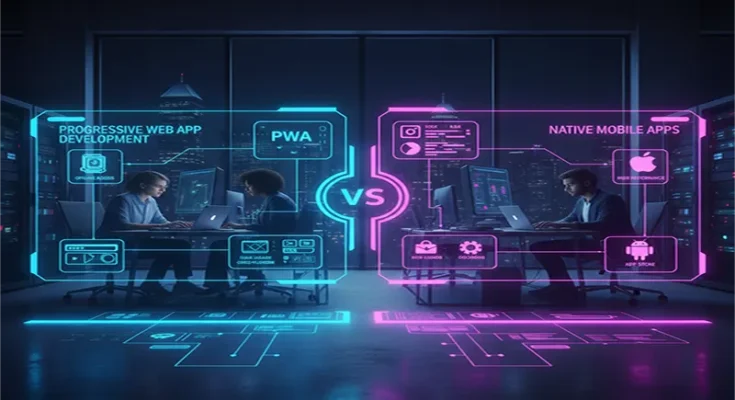
Progressive Web App Development vs. Native Mobile Apps for Startups

Progressive Web App Development vs. Native Mobile Apps for Startups

In 2026, the strategic calculation for a startup’s mobile presence has fundamentally changed. We are no longer in the era where “Native is the only way to feel like an app.” The technological gap that once separated the mobile web from the App Store has been bridged by WebAssembly (Wasm), enhanced Service Worker capabilities, and—most crucially—Apple’s comprehensive adoption of open web standards for iOS.

For a startup founder, the decision between a Progressive Web App (PWA) and a Native Mobile App is no longer just a technical choice; it is a financial and distribution strategy that can determine your “runway” and your “Time to Product-Market Fit.”

The “App Store Barrier” and the 2026 Shift

Historically, startups flocked to Native apps because they wanted two things: Push Notifications and a presence on the user’s Home Screen. For a decade, Apple restricted these features to Native apps only.

However, as …

Progressive Web App Development vs. Native Mobile Apps for Startups Read More