
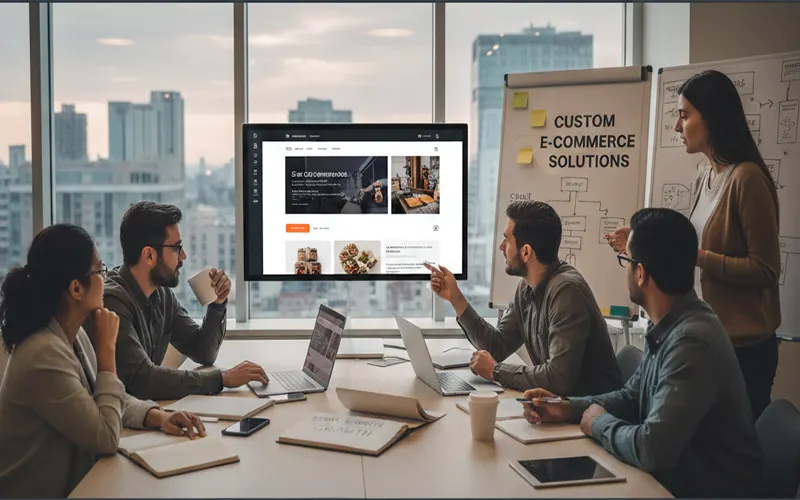
The digital storefront is no longer just an optional add-on for small businesses; it is the absolute cornerstone of modern commerce. As we push deeper into 2026, the online marketplace has become more competitive and sophisticated than ever before. Consumers expect seamless experiences, personalized interactions, and instant gratification. For small businesses, this means that a generic, “cookie-cutter” website, once a sufficient online presence, now often hinders growth rather than fostering it. To truly compete, capture market share, and cultivate a unique brand identity, small businesses must look beyond the limitations of basic templates and consider the strategic advantage offered by custom e-commerce web development.
The Critical Difference: Template vs. Custom E-commerce Solutions
Many small businesses begin their online journey with template-based e-commerce platforms like Shopify, WooCommerce with basic themes, or Wix. These platforms offer rapid deployment and a lower initial cost, which can be appealing. However, this convenience often comes with significant hidden limitations. Templates, by their very nature, are designed for broad applicability, meaning they often include unnecessary code that slows down site speed – a critical factor for both user experience and search engine optimization (SEO). Their rigidity also restricts unique branding, advanced functionalities, and deep third-party integrations crucial for scaling.
In contrast, custom e-commerce development involves building a site from the ground up, tailored precisely to your business’s unique needs, brand aesthetic, and operational workflows. This bespoke approach allows for unparalleled flexibility, optimal performance, and a future-proof architecture that can evolve with your business. While the upfront investment may be higher, the long-term benefits in terms of efficiency, scalability, and market differentiation far outweigh the initial outlay. It’s about building a digital asset that truly works for your business, not one that forces your business to adapt to its limitations.
Key Pillars of Custom E-commerce for Small Businesses
A custom e-commerce solution empowers small businesses to integrate advanced functionalities that drive sales and enhance customer loyalty. Three pillars are particularly crucial:
- User Experience (UX) & Conversion Rate Optimization (CRO): A custom build prioritizes an intuitive and delightful shopping journey. This includes lightning-fast page loading, clear navigation, personalized product recommendations, and a frictionless checkout process. Every element, from button placement to image quality, can be optimized for maximum conversion. A seamless UX translates directly into higher sales and reduced cart abandonment.
- Mobile-First Design: With the majority of online traffic now originating from mobile devices, a mobile-first approach is no longer optional. Custom development ensures your e-commerce site is not just responsive but optimized for mobile from the ground up, offering an equally engaging and efficient experience on smartphones and tablets.
- Third-Party Integrations: The ability to seamlessly connect with other business tools is a game-changer for small businesses. Custom platforms can be integrated with:
- Inventory Management Systems: Automate stock updates, prevent overselling, and streamline fulfillment.
- Customer Relationship Management (CRM) Software: Personalize marketing efforts, track customer interactions, and build stronger relationships.
- Local Shipping APIs: Offer real-time shipping rates and tracking, improving transparency and customer satisfaction.
- Accounting Software: Automate financial reporting and reduce manual data entry.
Must-Have Features for 2026:
- Personalized product recommendations
- Advanced search and filtering capabilities
- One-page or express checkout
- Robust customer review and rating systems
- Integrated live chat support
- Subscription management features
- Multi-currency and multi-language support (if applicable)
The Undeniable ROI of Custom E-commerce Development
Investing in custom e-commerce web development is not merely an expense; it’s a strategic investment with a significant return. While template solutions might seem cheaper initially, their limitations often lead to higher long-term costs through inefficient processes, lost sales due to poor performance, and the constant need for workarounds. Custom sites, built with clean code and optimized for speed and SEO, often achieve higher rankings in search results, driving more organic traffic and reducing reliance on paid advertising.
Furthermore, a site tailored to your specific conversion funnels and customer journey can dramatically increase your average order value and customer lifetime value. Imagine a site that flawlessly integrates upselling and cross-selling opportunities based on purchasing history, or a checkout process so smooth that it virtually eliminates abandoned carts. These efficiencies compound over time, transforming the initial investment into a powerful engine for sustained revenue growth.
Choosing the Right Development Partner
Selecting the right custom e-commerce development partner is paramount to your success. This isn’t just about finding someone who can code; it’s about finding a strategic ally who understands your business goals.
Here are key questions to ask:
- What is your portfolio of custom e-commerce projects, particularly for small businesses? Look for examples that align with your industry or business model.
- How do you approach the discovery phase to understand my unique business needs? A good partner will ask probing questions and not just jump straight into coding.
- What is your post-launch support and maintenance plan? Your website needs ongoing care, security updates, and performance monitoring.
- What is your recommended tech stack, and why is it suitable for my long-term goals? Ensure they can articulate the benefits of their chosen technologies.
- How do you handle scope changes and project communication? Transparency and clear communication are vital.
In today’s fast-paced digital economy, a custom e-commerce website is no longer a luxury but a fundamental necessity for small businesses aiming for sustainable growth and a competitive edge. It represents your most vital digital asset, a tireless salesperson and customer service representative working 24/7. By moving beyond the limitations of generic templates and embracing a tailored solution, small businesses can create a robust, scalable, and highly performant online presence that truly reflects their brand’s unique value proposition. Make the strategic decision to invest in your digital storefront, and watch it become your most effective employee, driving success for years to come.